


Background: Environmental Education and Biodiversity Promotion in the Structural Transformation of the Rhineland Mining Region
indeland GmbH is the development company of the seven municipalities surrounding the Inden open-cast mine in the Düren district. It is shaping the structural transformation in the run-up to the phase-out of lignite mining planned for 2030. Under its umbrella, the region developed a joint sustainability strategy in the inReNa 2030 project, funded by the Federal Ministry for the Environment, Climate Action, Nature Conservation and Nuclear Safety. One of the measures arising from it: seven mini-forests planted in the member municipalities to promote biodiversity and make environmental education tangible.
These forest areas of around 200 square metres are more than a habitat for flora and fauna. They also serve as living learning spaces for school classes and youth groups. On site, sponsorship groups of children and young people have become established who look after "their" mini-forests. The successor project inReNa 2030 II is now dedicated to the biodiversity monitoring of these mini-forests.
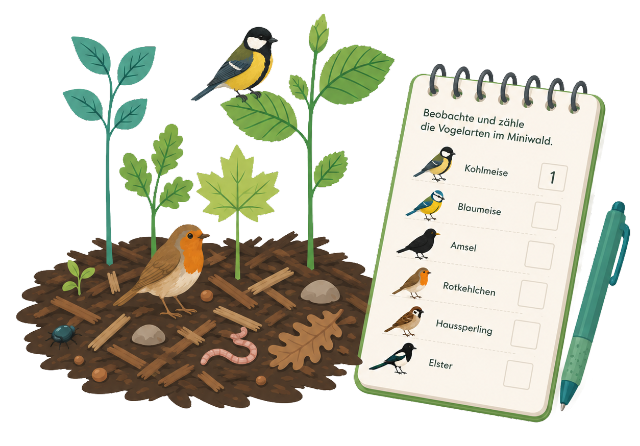
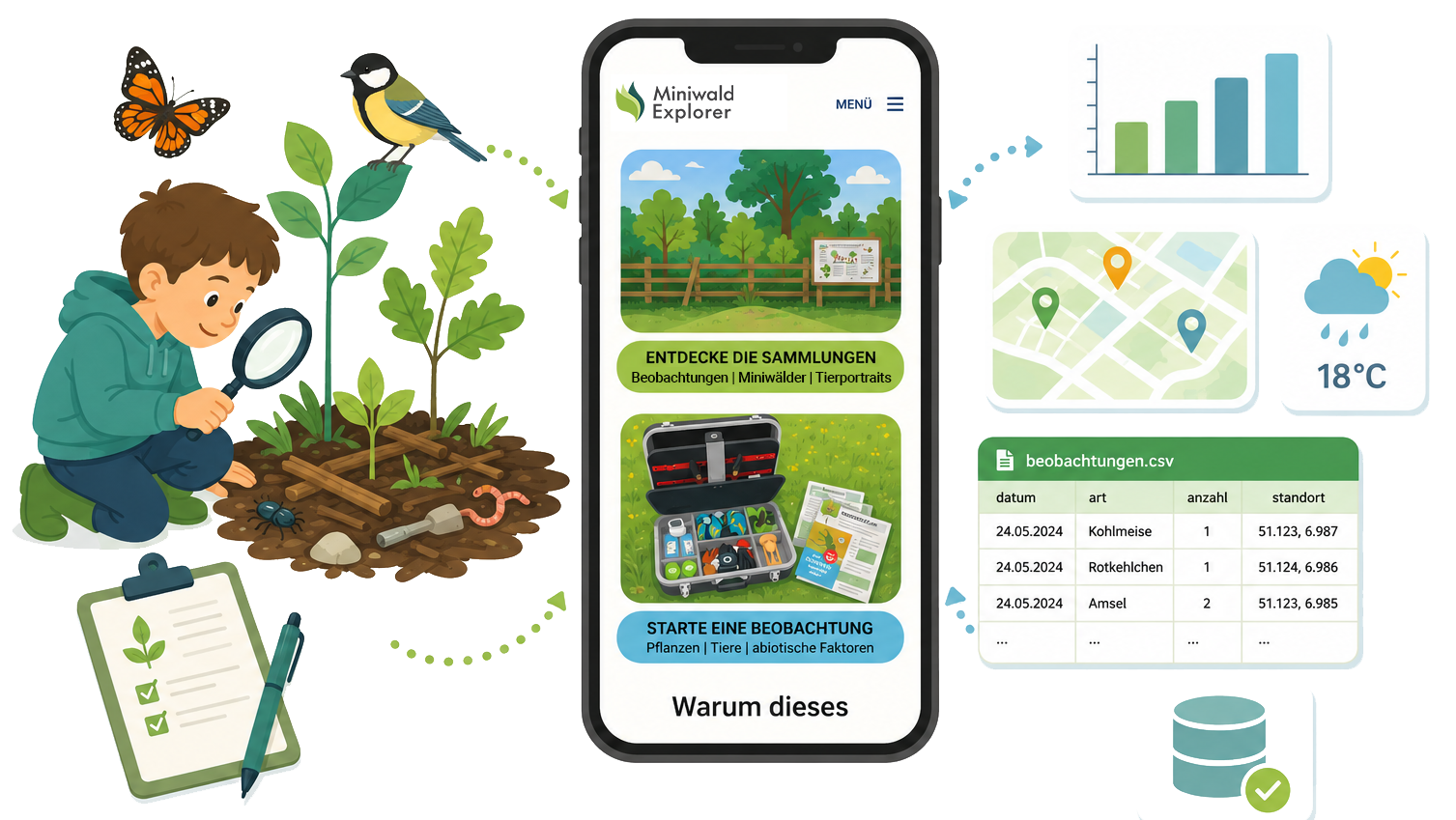
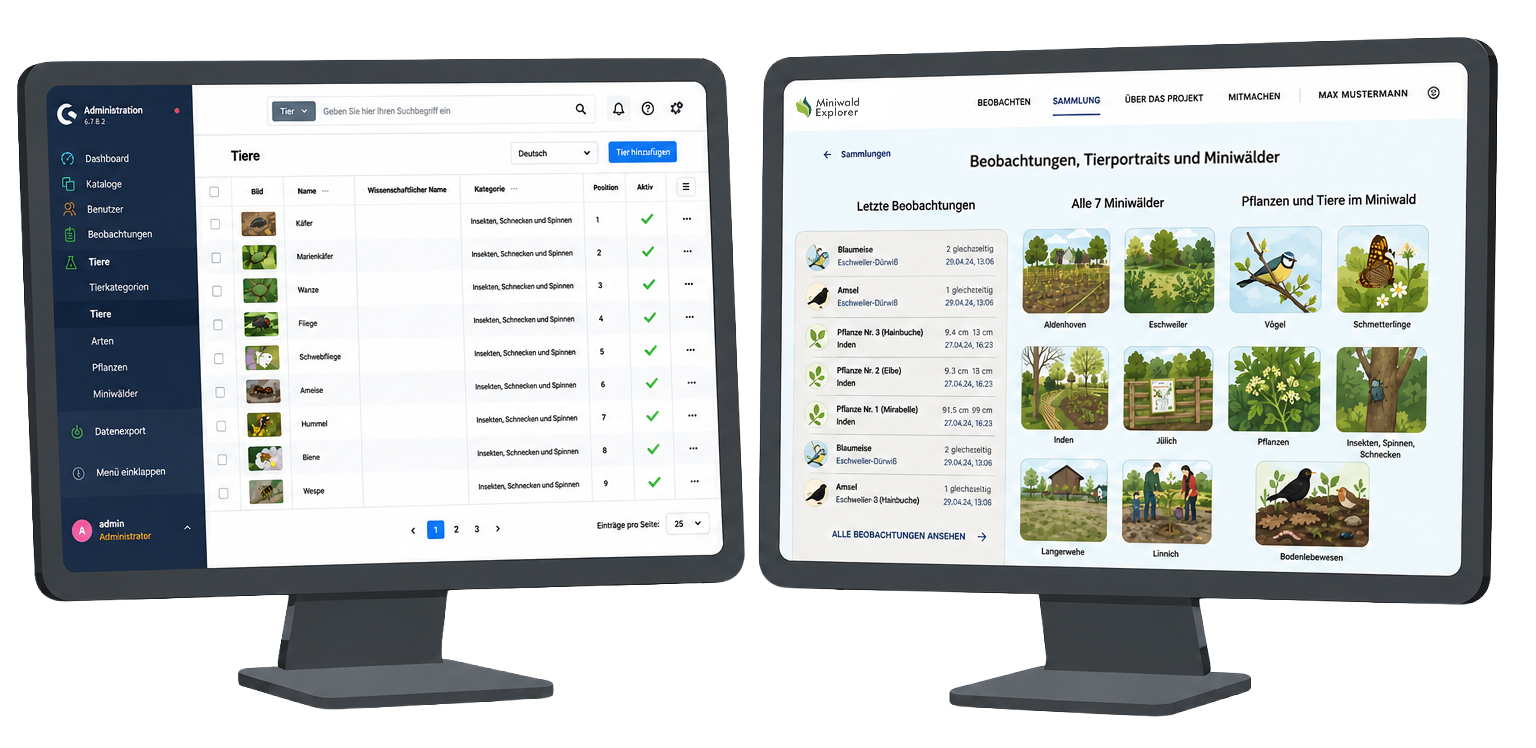
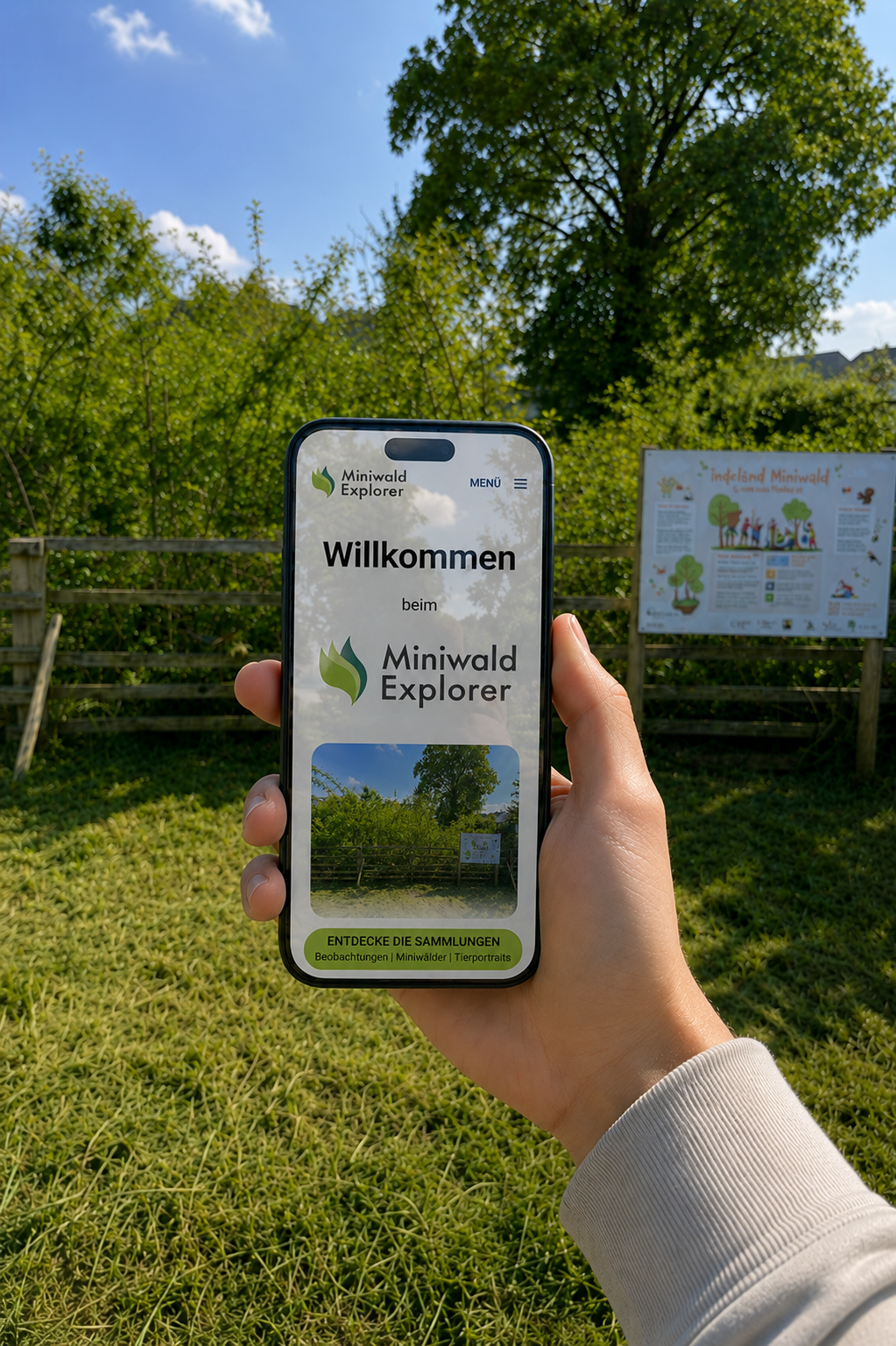
Helm & Walter was commissioned to develop a web app for biodiversity monitoring as a citizen science project. The goal was to create a pedagogically valuable and low-threshold solution that can be used by school classes and children as well as by volunteers conducting nature observations. At the same time, the application was to deliver scientifically reliable data for biodiversity monitoring.
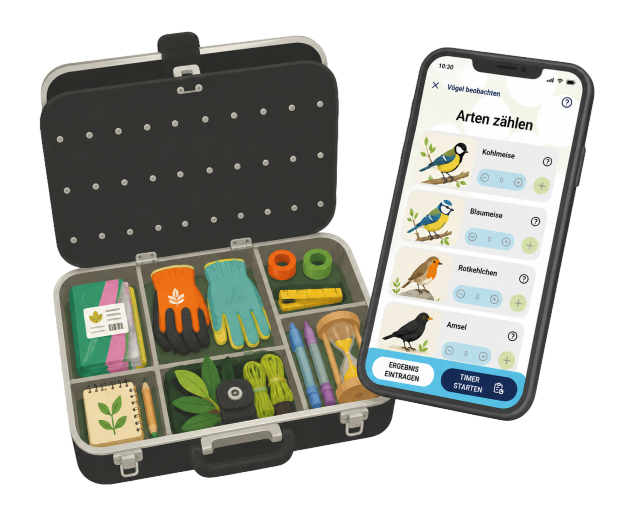
The platform has been live at https://miniwald-explorer.de since July 2026 and is continuously used by school classes and volunteers for nature observations in the indeland mini-forests. The web app is complemented by the researcher boxes: material sets for fieldwork directly in the mini-forest. Each box contains magnifying glasses, shovels and other observation instruments in multiple copies, so that an entire school class or group can work with them at the same time. Whatever is discovered can then be recorded immediately via the web app. In this way, the boxes connect hands-on experience of nature with digital documentation. A total of 14 researcher boxes are being delivered to schools as well as other children's and youth groups; seven of them are already in active use.
The further development and maintenance of the platform will continue until at least July 2028 as part of the inReNa 2030 II project. We will continue to actively support the project beyond that and ensure the long-term operation of the platform as a web app. The continued existence and use of the platform is particularly important to us, as we are committed to sustainably supporting environmental education and protection.